
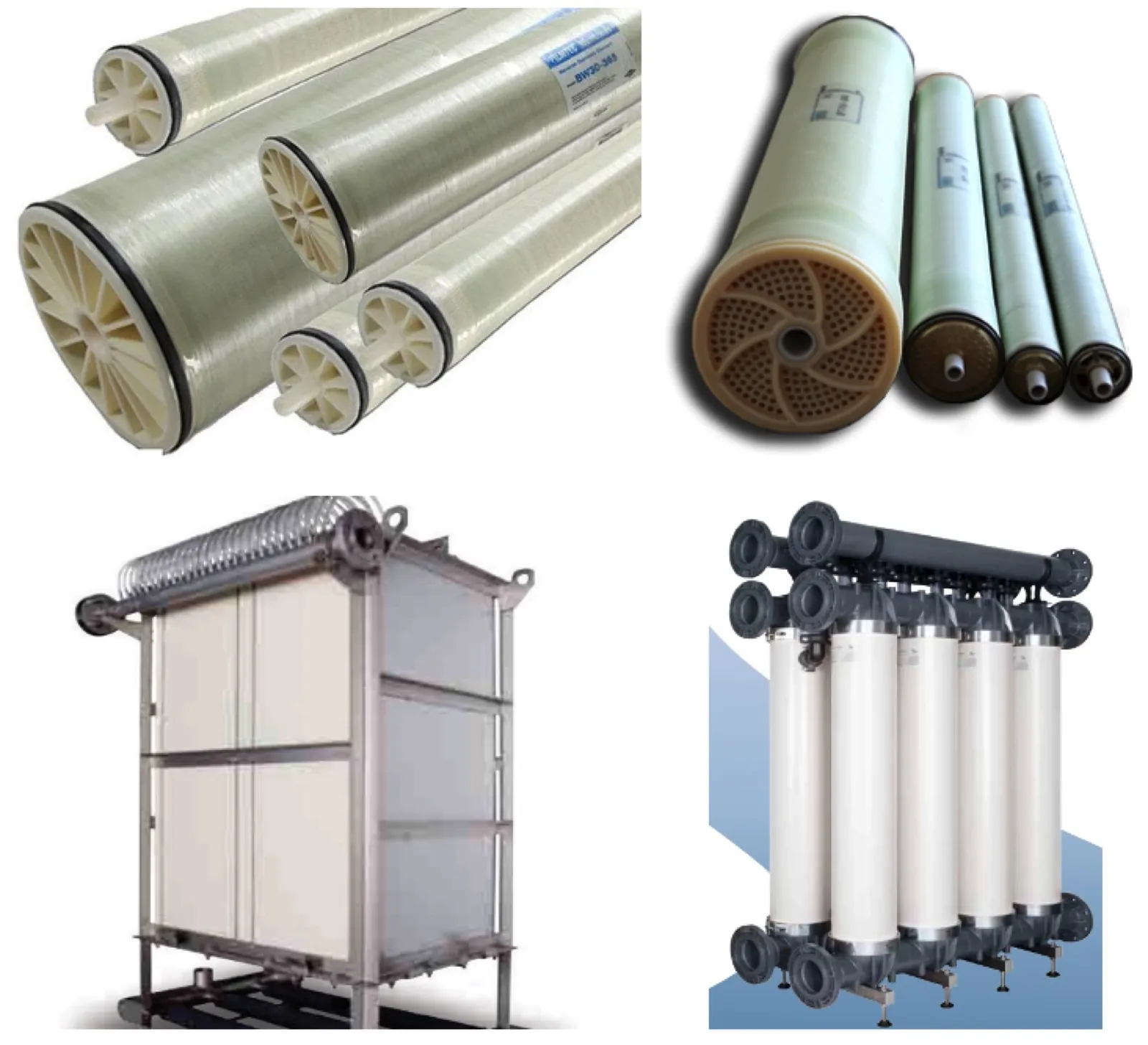
Almost every reverse osmosis plant problem shows up as one of three symptoms: low permeate flow, high salt passage (rising permeate TDS), or high differential pressure. The skill of troubleshooting an RO plant is knowing which of these you have, what most likely caused it, and whether the fix is a cleaning, a repair, or a membrane replacement.
This guide walks through each symptom in turn - the likely causes, how to confirm them, and the corrective action - so that operators and maintenance teams worldwide, with regional notes for India, the UAE, the Middle East, Africa and beyond, can restore plant performance quickly and avoid unnecessary membrane replacement.
Before you diagnose anything, normalise your data. Raw flow and TDS readings change with feed temperature, pressure and salinity. Compare normalised permeate flow, salt passage and differential pressure against your commissioning baseline. Without normalisation you will chase symptoms that are really just a cold winter feed or a pressure fluctuation.
The Three Symptoms at a Glance
| Symptom | Most Likely Causes | Typical Action Threshold |
|---|---|---|
| Low permeate flow | Scaling, fouling, low temperature, low feed pressure, blocked cartridge filters | Normalised flow down 10–15% from baseline |
| High salt passage (high permeate TDS) | Oxidation (chlorine), o-ring / seal leaks, high temperature, end-of-life membranes | Normalised salt passage up 10% |
| High differential pressure | Particulate fouling, biofouling, colloidal fouling, telescoping | Differential pressure up 15% from baseline |
Symptom 1: Low Permeate Flow
Low permeate output is the most common complaint - the plant simply is not making enough water. Work through the causes from the cheapest and easiest to check to the most involved.
Check 1 – Feed water temperature
Membrane flux is highly temperature-dependent. Permeate flow falls roughly 3% for every 1°C drop in feed temperature. A plant commissioned in summer will genuinely produce less water in winter - this is physics, not a fault. This is a common seasonal issue in northern India and higher-altitude African installations. Normalise to 25°C before concluding anything is wrong.
Check 2 – Feed pressure
Low feed pressure directly reduces net driving pressure and therefore flow. Confirm the high-pressure pump is delivering rated discharge pressure. A worn or cavitating pump, a throttled valve, or a VFD set too low will all starve the membranes. If your high-pressure RO pump can no longer reach its design pressure, it may need overhaul or replacement.
Check 3 – Cartridge filters
Clogged 5-micron or 1-micron pre-filters create a large pressure drop before the membranes, reducing the pressure available for permeate production. If the pressure drop across the cartridge housing exceeds about 0.7–1.0 bar, change the cartridge filters. Rapidly clogging cartridges also point to an upstream pre-treatment problem.
Check 4 – Scaling and fouling
If temperature, pressure and filters are all normal but normalised permeate flow has fallen more than 10–15%, the membranes themselves are scaled or fouled and need chemical cleaning (CIP). The nature of the loss usually hints at the cause:
- Scaling (calcium carbonate, sulphate, silica) typically shows as flow loss combined with rising salt passage, worst in the last-stage elements where the concentrate is most saturated.
- Fouling (organics, colloids, biofilm) usually shows as flow loss combined with rising differential pressure, worst in the first-stage elements where feed enters.
Prevention beats cleaning: Most flow-loss scaling is preventable with correctly dosed antiscalant. If you are cleaning for scale more than a couple of times a year, revisit your antiscalant selection and dose rate - see our antiscalant dosing guide for calculation help.
Symptom 2: High Salt Passage (Rising Permeate TDS)
When permeate TDS climbs, the membrane is letting more dissolved salts through than it should. This is often more serious than a flow drop because some causes are irreversible. Diagnose in this order:
Cause 1 – Oxidation / chlorine attack
Polyamide RO membranes are permanently damaged by free chlorine above ~0.1 ppm. If chlorinated feed reaches the membranes - because the dechlorination step (activated carbon or sodium metabisulphite / SMBS dosing) failed - salt passage rises sharply and irreversibly. Check for free chlorine in the feed immediately upstream of the first membrane. Oxidation damage cannot be cleaned out; affected elements must be replaced.
Cause 2 – O-ring and interconnector leaks
A damaged brine seal, interconnector o-ring, or product-tube o-ring lets high-TDS feed or concentrate leak directly into the permeate. Even one leaking o-ring can raise the TDS of the entire system. This is a common and inexpensive fix - a probe test or vessel profiling identifies the leaking vessel, and replacing the o-ring or interconnector restores rejection. Always inspect seals whenever elements are removed.
Cause 3 – High feed water temperature
Just as high temperature increases flow, it also increases salt passage. Gulf seawater and Indian summer feed water can exceed 35°C, pushing permeate TDS up even on a healthy plant. Normalise before concluding the membranes are faulty. This is a frequent question from operators in the UAE, Saudi Arabia and southern India.
Cause 4 – Membrane ageing / end of life
Membranes gradually lose rejection over years of service. If salt passage is high across the whole system, chemical cleaning does not restore it, and there is no chlorine or leak, the elements have likely reached end of life (typically after 3–5 years) and need replacement.
Symptom 3: High Differential Pressure
Differential pressure (ΔP) is the drop between feed and concentrate pressure. A rising ΔP means the feed channels inside the elements are being physically blocked. This is a fouling problem, and it needs prompt attention - running at high ΔP can telescope (mechanically deform) the elements and cause permanent damage.
Particulate and colloidal fouling
Suspended solids, silt, iron and colloidal matter accumulate in the lead elements. The root cause is pre-treatment: check that feed SDI (Silt Density Index) is below 3–5. High-turbidity surface water - common across many African river-fed plants and monsoon-affected Indian sources - needs robust coagulation, media filtration, and often ultrafiltration ahead of the RO.
Biofouling
Biofilm growth is the toughest fouling to control and is aggravated by warm feed water - a persistent challenge in the Middle East, coastal Africa and tropical South-East Asia. It shows as steadily rising ΔP with declining flow. Biofouling requires alkaline CIP with a biocide-compatible cleaner and, often, a review of the disinfection strategy upstream.
Act early on ΔP. When differential pressure rises 15% above baseline, clean promptly. Waiting until the plant trips on high ΔP risks telescoped, unrecoverable elements - turning a routine cleaning into a full membrane replacement.
The RO Cleaning (CIP) Procedure in Brief
Chemical cleaning restores membranes fouled by scale, organics or biofilm. The correct cleaner depends on the foulant:
| Foulant | Cleaner Type | Notes |
|---|---|---|
| Carbonate / metal scale | Low-pH acid clean (citric or HCl based) | Removes calcium carbonate, iron and metal hydroxides |
| Sulphate / silica scale | High-pH alkaline clean | Often needs specialist formulations; silica is difficult |
| Organics / biofilm / colloids | High-pH alkaline clean (with surfactant/biocide) | Clean lead elements first; may need two cycles |
- When both scaling and fouling are present, generally do the alkaline clean first, then the acid clean.
- Observe the membrane manufacturer's pH and temperature limits for cleaning solutions - exceeding them damages the membrane.
- Use good-quality (RO permeate) water to mix cleaning solutions, never raw feed water.
- Circulate, soak, and flush thoroughly; dispose of spent cleaning solution responsibly.
Quick Diagnostic Reference
| What You Observe | Most Probable Cause | First Action |
|---|---|---|
| Flow down, ΔP up, first stage worst | Particulate / bio / colloidal fouling | Alkaline CIP; check SDI & pre-treatment |
| Flow down, salt passage up, last stage worst | Scaling (carbonate / sulphate / silica) | Acid CIP; review antiscalant dose |
| Salt passage up sharply, flow normal or up | Chlorine oxidation or o-ring leak | Check free chlorine & seals; replace if oxidised |
| Flow down uniformly, all stages | Low temperature or low feed pressure | Normalise data; check pump & filters |
| No recovery after cleaning, high salt passage | End-of-life or oxidised membranes | Replace membrane elements |
Regional Notes
India
High-silica, high-hardness borewell water across Tamil Nadu, Rajasthan, Gujarat and Andhra Pradesh makes scaling the dominant issue - antiscalant selection and dosing are critical. Seasonal temperature swings also cause genuine (non-fault) winter flow drops that operators sometimes mistake for fouling.
UAE, Saudi Arabia & the Gulf
Warm, high-organic Gulf seawater makes biofouling and high ΔP the leading SWRO challenges. High feed temperature also elevates permeate TDS on healthy plants - always normalise before judging membrane condition.
Africa
River- and lake-fed plants (Niger Basin, Lake Victoria catchment, Nile Basin) carry high, seasonally variable turbidity, so particulate fouling and pre-treatment upsets are the usual causes of high ΔP. UF pre-treatment to bring SDI below 3 dramatically reduces cleaning frequency.
South-East Asia, Australia & worldwide
Tropical surface water in Malaysia, Indonesia, the Philippines and Thailand is biofouling-prone; brackish groundwater in Australia and the Americas behaves much like Indian borewell water, with scaling as the main risk. In all cases the diagnostic logic above applies - normalise, identify the symptom, target the cause.
When to Replace Instead of Clean
Cleaning is the right first response to flow loss and high ΔP. Replace membranes when:
- Chemical cleaning no longer restores normalised flow and rejection.
- Salt passage stays high after cleaning (oxidation or physical damage).
- Elements are telescoped, crushed, or have visible mechanical damage.
- Elements are simply at end of life after 3–5 years of service.
Keeping good normalised performance records is what makes this call clear - it tells you whether membranes need cleaning or genuine replacement, and prevents both premature spend and unnecessary downtime.
Get Replacement Membranes & Cleaning Chemicals from Genoasis
When troubleshooting points to replacement or cleaning, we can help fast. To get an accurate quotation, share your feed water analysis, current membrane brand and model, element size and count, and your delivery country. We supply RO membrane elements, cartridge filters, antiscalants and CIP cleaning chemicals, and high-pressure RO pumps to projects across India, the Middle East, Africa and worldwide. Contact our technical team for a prompt quotation and troubleshooting support.
Frequently Asked Questions
Why is my RO plant permeate flow suddenly low?
A sudden drop in permeate flow is most often caused by membrane fouling or scaling, low feed water temperature, low feed pressure, or clogged cartridge filters. Check feed temperature first (flow falls about 3% per 1°C drop), then feed pressure and cartridge differential pressure. If those are normal and normalised flow is down more than 10–15% from baseline, the membranes need chemical cleaning (CIP).
What causes high TDS or high salt passage in RO permeate?
Rising permeate TDS is usually caused by chlorine oxidation of the membrane, o-ring or interconnector leaks letting feed bypass into the permeate, high feed temperature, or ageing membranes at end of life. Check for free chlorine in the feed first, then inspect the o-rings and permeate-side seals. A single leaking o-ring can raise the TDS of the whole system.
What does high differential pressure across RO membranes mean?
High differential pressure (the drop between feed and concentrate) means the feed channels inside the elements are blocked - usually by particulate fouling, biofouling, or colloidal fouling. If ΔP rises more than 15% above baseline, clean the membranes promptly; running at high ΔP can telescope and permanently damage the elements.
How often should RO membranes be cleaned (CIP)?
Clean when normalised permeate flow drops 10–15%, normalised salt passage rises 10%, or differential pressure rises 15% from baseline. Well-run brackish plants may need CIP every 3–6 months, while high-fouling surface-water or warm biofouling-prone plants may need monthly cleaning. Cleaning on schedule rather than after severe fouling greatly extends membrane life.
How long do RO membranes last and when should they be replaced?
RO membranes typically last 3–5 years under good operating conditions. Replace them when cleaning no longer restores normalised flow and rejection, when salt passage stays high after cleaning (oxidation or physical damage), or when elements are telescoped or crushed. Good normalised performance records make it clear when membranes have truly reached end of life versus simply needing a clean.